1. The end of an era

    I have worked within the world of adoption for over 30 years now. I never set out to do this but opportunities presented themselves and I said yes. I originally spent time as a volunteer at NORCAP in Oxfordshire as I wanted to give something back to say thank you for the support they had given me in finding and contacting my birth family. I started out helping with filing and general administrative tasks and looked forward to spending time in the office with the rest of the team.

    The NORCAP office also had a search room which housed a microfiche reader, various telephone and trade directories plus microfiche copies of the BMD indexes for England and Wales. There were other search aids too, but when I started in the 1990s that was pretty much the extent of the tools available to trace someone. NORCAP also had an in-house researcher and when this person left I was asked if I would be able to take over from him as I was a genealogist. My first thought was absolutely not! As a genealogist I was used to tracing information about ancestors, generally people who have already died and who have (in most cases) left something of a paper trail to follow. Tracing living people was a whole different world and one in which I was not remotely interested.

    However Reader, I said yes and the rest is history. I was able to help people who came into the search room wanting to look for their family and eventually I became a NORCAP researcher who also carried out the non-disclosure searches (for adopted people on behalf of birth relatives). The tools available to trace living people have evolved to such an extent that a lot can now be done online and I no longer need weekly trips into London to order certificates. The addition of consumer DNA testing has also changed the adoption landscape, now providing the possibility of determining the identity of a birth parent who had not been named in the records.

    I spent many happy years doing this work and have also been privileged to work alongside so many wonderful people in Adoption Services for Adults, Barnardo’s and PAC-UK as well as a number of other Local Authority adoption services and charities. I have worked as a searcher and as an intermediary, both incredibly rewarding roles. I added DNA analysis to my toolset and have worked closely with Mia Bennett for the last few years.

    Due to a number of unanticipated changes in my life I have found myself at a crossroads. After a lot of soul searching I realise that it is time to change my focus and I have decided to retire from the adoption and DNA chapters of my working life. Adoption has defined me in so many ways but now is the time to move away from tracing and back to genealogy, as well as returning to my passion of lifelong learning. I am going back to University to complete my MSc in Genealogical, Palaeographic and Heraldic Studies and that makes me very happy (and a little bit daunted)! I am not retiring completely, but from now on I will only be working on family history projects, mainly in the North Yorkshire area.

    For any adoption questions please start with the Family Connect website: https://www.familyconnect.org.uk/.

    For any DNA questions please contact Mia Bennett: research@miagenealogy.com.
  2. Organising my family history

    2 years ago I made a New Year’s resolution to get on with organising my family history … it has taken a worldwide pandemic and an instruction to stay at home to force me to face the fact that I can make no more excuses about a lack of time. It seems that my problem is more about perfectionism.

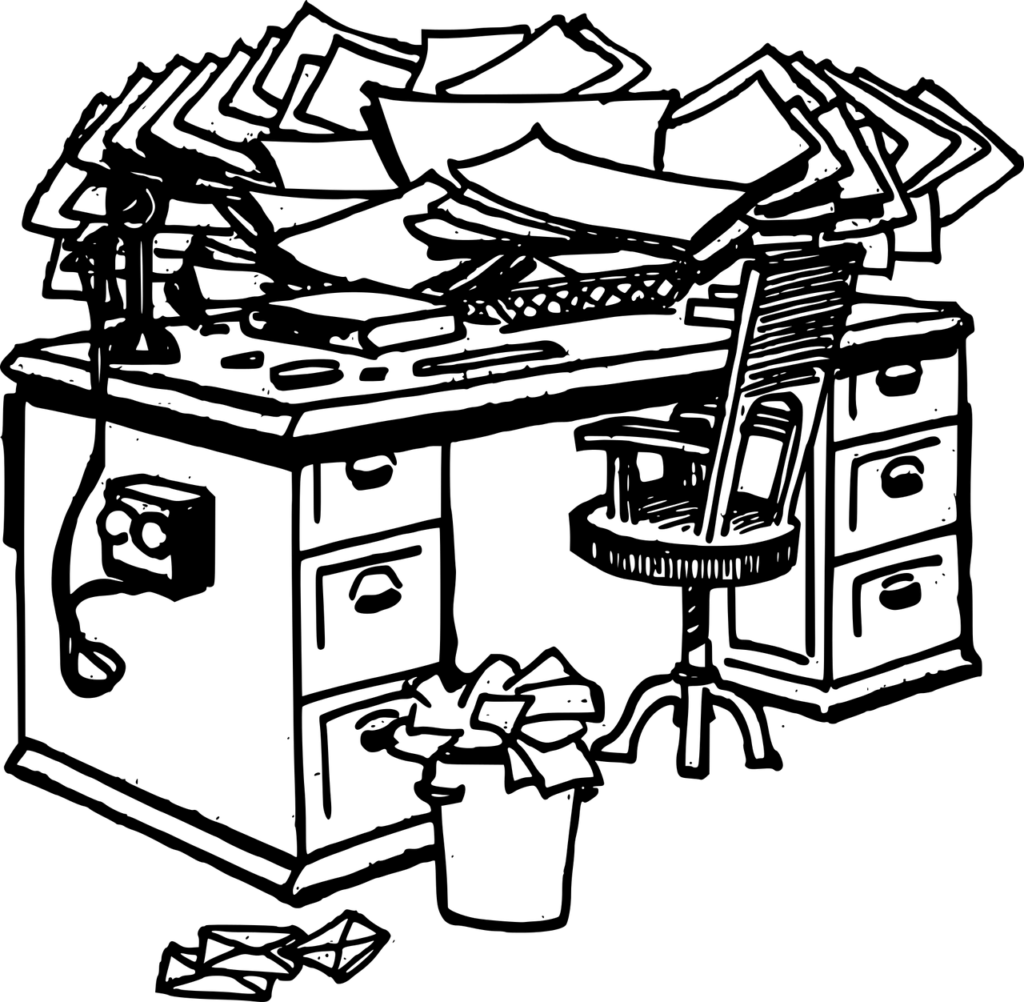
    Family history is not a single thing, instead it is an all-encompassing term for a mass of physical documents, folders, files, binders, papers, memorabilia, newspaper articles, photos, artefacts, family trees, books, letters, diaries, family bibles and certificates – not to mention the digital versions of the same! If, like me, you are a bit of a perfectionist, the idea of organising such an eclectic mix of “stuff” may leave you in a panic. You can’t start until you have the ideal way of doing it (by which I mean “all” of it), and so you search to find that perfect way of achieving your goal. This, of course, doesn’t actually exist. For every different person there is another different approach to being organised. I can’t tell you the number of times I’ve re-organised my home filing system because I followed someone else’s method and then couldn’t find anything! So the perfectionist procrastinates. No point starting until you know exactly what you want to do and how to do it. Then you get annoyed or depressed because you haven’t done anything and the stack of boxes is still there, looking at you accusingly (although in my case, the stack has moved rooms several times and been up and down to the loft on more than one occasion).

    Image by OpenClipart-Vectors from Pixabay

    When we were told by the government to stay at home back in March, I made a pact with myself that I wouldn’t do anything fun (by which I mean more family history research!) until I had done all those things I had been putting off. That worked with the tax return (I have a process, I know what to do, it has a very specific outcome). It worked with decluttering my office space because I was able to be definite and ruthless, plus I had committed to sharing the room with my husband who was now also working from home. However, it did not work straight away with my family history organisation because I felt overwhelmed by two things: the size of the task and the sheer volume of differing advice available from other people.

    Image by Gerd Altmann from Pixabay

    So many organisational blogs talk about the boxes, folders, labels and coloured pens you will need to buy, but my issue has been an inability to even get to the point where I can use them as I’m stuck at the first hurdle. Off I trot to the office supplies shop, buy all this gorgeous stationery, bring it home (well, have it delivered after my online shop) and there it sits, along with the overflowing boxes, waiting for me to start doing something. Anything.

    Image by StockSnap from Pixabay

    My lightbulb moment came when I watched a(nother) YouTube video on organisation which mentioned in passing unique IDs for individuals and documents. FamilySearch apparently automatically assigns these and they are shown on charts and reports. I don’t maintain my family tree online, but I do use Reunion on a Mac. My first thought was, what a great idea, but I don’t think Reunion does this. I went in search of Reunion tutorials and found it offers all sorts of ID possibilities. How did I not know this?!

    Image by Wokandapix from Pixabay

    The process I realised I needed to follow is actually quite straightforward:

    Step 1 ensure each person I have in my family tree has their unique ID available to me on reports, then everything I subsequently do can be connected to the correct person. This removes the need to worry about alphabetical order, multiple marriages, maiden names, adoptions, aliases and other random issues, as a person is identified by a single number leaving my software (and filing cabinet) to manage the additional information.

    Step 2 decide on my storage location (physical and digital) and my backup strategy.

    Step 3 gather together all the items I have for one family line and start scanning, linking and documenting my sources.

    It turns out that whilst the process is quite simple, the execution takes a very long time. Thus step 4 was to allocate an hour a day to this project so that it seemed less overwhelming.

    There is one big “however”! I quickly recognised that I have to allow for improvements and refinements as I proceed. I started using an Excel spreadsheet as a sort of dashboard to show information on ancestors. After I had entered details on one family branch, however, I realised that I needed to make some changes. In traditional genealogy everything initially centres around the male line, and this is still my default starting point, but that meant I was missing so much information on the women in my family, not to mention anyone outside the direct line. I needed a lightbulb moment to get started, but I had to get started to understand what I needed.

  3. DNA testing and the adopted person

    Having taken an Ancestry DNA test last year, I uploaded my test results, got excited to see about the right amount of Irish ancestry I had been led to believe should be present, and then lost interest when the only connections were 4th-6th cousins. I looked at the few connected trees and couldn’t see any links. As so few people in my birth families are aware of me, I thought it best not to put my family tree out there.

    When I was unwell a few months ago, I gave myself a whole day off work. I couldn’t switch my brain off, so I treated myself to some rare personal genealogy time. For the first time I created a pedigree for my birth family.

    I had looked at both sides separately before, with birth mother or father as the starting individual, but I had never before connected the two sides and used myself as a starting point. It felt very strange. It’s difficult to explain. I feel part of my adoptive family genealogies, because they are my family, and perhaps because I have researched them since I became interested in genealogy some 40 years ago. Even though I am clearly genetically linked to my birth family, I don’t feel connected to that ancestry. Seeing it all on a family tree was as if I were looking at someone else’s life.

    I accelerated my research in late January to beat the imminent increase in the cost of GRO certificates. I made a concerted effort to trace my birth family through vital records and as a result made some great discoveries. I have several nineteenth century ancestors who were themselves illegitimate, making further research slightly more challenging! I have a number of male mental health professionals amongst my early twentieth century direct line, which links nicely to my own interest in the field. To top it all, last month I discovered that I have a third cousin who is also a professional genealogist!

    It may still not feel like my own family tree, but perhaps there is something to be said for genetic genealogy.

  4. The sad case of Charles Barry and his family

    I have an interest in mental health, having studied Psychology at university and then worked in a number of support roles over the years, so it was very interesting for me to find that my house is built on the site of a former mental hospital. West Yorkshire had a county asylum in Wakefield from the early nineteenth century, but the expanding population outgrew its capabilities, and eventually the South Yorkshire Asylum was opened in Sheffield in 1872.

    Photo credit: Sheffield Local Studies Library via PictureSheffield


    The surviving records are held at the Sheffield Archives and provide a fascinating insight into our early understanding of mental illness. As I examined the documents, I wondered about the lives of the people who spent time inside the asylum and have begun to research some of them.

    One rather unusual case particularly intrigued me, and seems especially fitting as it is the festive season. Charles James Barry was admitted to the asylum from Huddersfield on 13 December 1877 at the age of 21. His stated cause of insanity? Writing a pantomime! I found evidence of his belief in his comic writing abilities from an article in the Yorkshire Evening Post, dated 11 December 1936, which claimed that he had published a comic almanac in 1877. Perhaps this was what prompted him to attempt his pantomime.

    Yorkshire Evening Post, 11 December 1936, © Johnson Press plc, via The British Library Board


    Charles Barry was the son of James Barry, a Solicitors Managing Clerk from Cornwall, and Ann Barry (nee Chard) from Somerset. Born in Bristol on 7 April 1856, by the age of 14 he too was clerking for a Solicitor. His family moved around a lot, and his siblings were born as far apart as Gloucestershire, Essex, Shropshire and Yorkshire.

    By early 1877, Charles had married Sarah Haigh in Huddersfield, and the young couple were expecting their first child. Charles then decided to write a pantomime. Such were the effects of this activity, that he became severely distressed. He was sent to the Asylum for treatment, which at that time most likely included sedation, confinement and occupational therapy. During his rehabilitation, Charles was co-resident with others who had been admitted for issues as diverse as religious mania, delusions, disputes about property, those suffering from head injuries, strokes and epilepsy, as well as others who were struggling with bereavement. There were Coal Miners, Housewives, Teachers, Labourers, Millhands, Weavers, Chemists and Booksellers. Hundreds of men, women and children whose ages ranged from 2 to 92.

    Ward for men, a mental hospital in Britain.. Credit: Wellcome Collection. CC BY


    His recovery took almost a year, which meant that Charles was never to meet his first born child. His daughter Agnes was born in Huddersfield early in 1878, but sadly died within a couple of months. Charles was finally discharged on 23 September 1878. Once home, he wasted no time getting his life back on track. He and Sarah moved to Grimsby, and went on to have 8 more children, including twin daughters in 1887. Sadly, like Agnes, two more of their children were to die before they reached their first birthday.


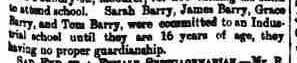
    His rather extreme reaction to penmanship did not stop Charles from following his love of writing. In 1881 he was working as a Shorthand Writer and living with his growing family in Lincolnshire, but by 1891 he had disappeared. Sarah and their children were recorded on the census in Bolton, but without Charles. He popped up again on the 1911 census, living in Kent with his “wife” Jane Eliza, to whom he had allegedly been married for 8 years, although I couldn’t find any marriage details. Charles was still involved with writing, by then working as a self-employed Letterpress Printer. His abandoned family split up not long after he left. An item in the Bolton Evening News reported that a School Board hearing committed four of his children to the local Industrial School until they reached 16, as they had no adult to care for them.

    Bolton Evening News, 1 February 1893, © The British Library Board


    This leaves so many unanswered questions. What happened to their mother? Their older brother was too young to look after them, and I found him living and working with other families on subsequent census returns. Sister Sarah appeared in 1901 having remained in Lancashire. James, on the other hand, appeared in Shropshire. Did he find work with a friend of his grandparents? Grace had a twin sister, for whom I did not trace a death. Where did she go? Mind you, Grace was originally registered as Mabel, so perhaps her twin’s name was changed too! The other big questions are of course about Charles. What exactly happened at the end of 1877? Did he continue to have mental health problems throughout his life? Perhaps that was a factor in the break up of his marriage. There is still so much more to be discovered about the sad case of Charles Barry and his family.

  5. We Shall Remember Them

    The approach of the centenary of the ending of the First World War made me think about the members of my own family who fought. Of those who returned, many were scarred forever by their experiences. Still more signed up for an adventure but were never to come home.

    My grandfather, Frederick George Watson, fought in the war and survived. He was born in Ashford, Kent on 11 September 1895, the middle child of Frederick and Kate Watson. On 17 May 1915, at the age of 19 years and 8 months, Frederick travelled to Canterbury where he enlisted in the 1st East Kent Regiment (Mounted Rifles) of the Territorial Force. On 13 January 1916 he set sail for Egypt before being transferred to the 10th East Kent (The Buffs). He supported the defence of the Suez Canal, then saw action in Palestine and Gaza, recapturing Jerusalem in December 1917. In April 1918 his regiment then moved to France where he took part in the second Battles of the Somme and the Battles of the Hindenburg Line. Having escaped physically unscathed until this point, he then contracted trench fever before being admitted to hospital suffering the effects of shell gas less than two weeks before the Armistice.

    Frederick was demobilized on 26 March 1919 and returned to Ashford where he married his sweetheart, Alice Emily Cooter, had two sons and lived to see the births of his six grandchildren. He served in the Home Guard during the second World War, remaining in Ashford until his death in 1976.

    Neither my great-uncle Edgar Collison, nor my husband’s great-uncle, Edgar Cook, were so fortunate. I know little of what happened to either of our Edgars. Unfortunately, many of the First World War soldier’s service records were destroyed in a fire from an incendiary bomb dropped on London during the Second World War. Of those that survived, most were severely damaged by the fire, or from the water used putting out that fire.

    Edgar Collison was the son of John and Mary Ann Collison. Born in Eye, Northamptonshire on 26 January 1880, Edgar was the fourth of nine children. He was working as a sawyer in 1901 and still at home with his parents (now living in London) along with two older and four younger siblings. At some point in the next few years he moved to Portsmouth, and when the 1911 census was taken he was working as a skilled labourer at the Gun Wharf, run by the Naval Ordinance Department[1].

    Edgar never married. I’m guessing he may have been conscripted in March 1916, along with other able bodied single men between the ages of 19 and 41. He died of wounds on 7 May 1917 in France and is buried at Etaples Military Cemetery. He was Rifleman 393595 in the 1/9th Battalion London Regiment at the time of his death, having served with them from 25 December 1916. His unit took part in the Battle of Arras (the Third Battle of the Scarpe) at Monchy-Le-Preux on 3 May 1917. This was a German defensive victory, with the attack called off by the allies following severe casualties. The War Diary of his unit for 3 May states: “… trenches heavily bombarded Several casualties in all companies” and the following day: “Battalion estimated casualties from May 1st – 100 O[ther] R[an]ks”.

    Edgar Cook was the son of Henry and Alice Eliza Cook, born on 5 May 1896 in Islington. He was the fourth of eleven children. The 1911 census describes him as working at the GPO as a messenger, despite his older brothers and father all working on the railways. According to his commemoration at the Commonwealth War Graves Commission, by the time he enlisted he had moved on to be a letter sorter at Mount Pleasant in Clerkenwell.

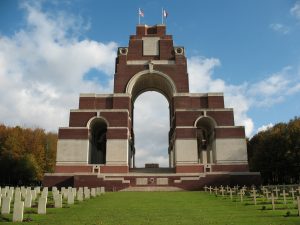
    Private Edgar Cook, then just 20 years old, of the 10th Battalion, Essex Regiment was killed in action on 26 September 1916. One of the Battles of the Somme (the Battle of Thiepval Ridge) took place on this day at Authuille. The battle is described as a British victory, with the 10th Essex one of the lead battalions whose objective was to retake Thiepval village. The advance met heavy resistance, but ultimately succeeded in driving out the German military by the next morning. As Edgar was a Private, again his death elicited no more than a passing reference in his regimental War Diary as one of the 23 “other” ranks who were killed that month.

    Edgar Cook (Private 43218) has no known grave, and is commemorated at Thiepval Memorial to the Missing of the Somme.

    In Flanders fields the poppies blow
    Between the crosses, row on row,
    That mark our place; and in the sky
    The larks, still bravely singing, fly
    Scarce heard amid the guns below.

    We are the Dead. Short days ago
    We lived, felt dawn, saw sunset glow,
    Loved and were loved, and now we lie
    In Flanders fields.

    Take up our quarrel with the foe:
    To you from failing hands we throw
    The torch; be yours to hold it high.
    If ye break faith with us who die
    We shall not sleep, though poppies grow
    In Flanders fields.

    John McRae

    3 May 1915


    [1] http://www.ataleofonecity.portsmouth.gov.uk/place/gunwharf-quays/

  6. There is more to life than increasing its speed

    The title of this blog is a quote from Mahatma Ghandi and seemed pretty apt for my lastest musings. We have just spent two weeks canal boating around Warwickshire and Staffordshire, a new adventure for us and our dog. Life onboard is so different to our everyday existence. With a top speed of around 4 mph, no internet and no way to hasten the draining or filling of each lock, there is no point in doing anything but relaxing and switching to a lower gear. At certain points the canal ran alongside railway lines, or was crossed by motorways. We were passed at speed by trains and cars, lorries and motorbikes charged over bridges as we chugged along underneath. Planes flew overhead, with people traveling huge distances in search of sunshine, or work, or maybe to start a new life. We still got where we wanted to be, just not as fast as we are used to in today’s hectic world.

    I reflected on the parallels this suggested with genealogy – bear with me! When I started out on this frustrating, challenging and exciting journey to discovering my ancestry, I could only take small steps at a slow pace. Working full time I had to wait for annual leave to be able to visit County Record Offices, or take a trip to an ancestral parish so I could wander through graveyards searching for clues. I relied on other researchers answering letters, or contacting me after seeing my search interests in a family history magazine. Progress was slow but satisfying.

    Today, websites offer to tell you your family history if you just put in your name. People can create family trees containing thousands of names in a short time by linking to other people’s trees with possibly unverified or wholly inaccurate connections. Where is the satisfaction in that? This is not family history but name collecting. Some of today’s genealogists may well be missing out on the joys of ancestor hunting, simply by going too fast. It shouldn’t be a race, nor a competition to have the greatest number of individuals on a family tree. For me, genealogy is a way of paying tribute to my forebears, to the people who paved the way for me to be who I am.

    Our trip has been great fun. Yes it was hard work (Hatton Locks on our second day, for anyone who knows them!), but each mile we covered and each lock we went through gave such a sense of achievement. We spotted things we would never have seen at 70 mph – swans nesting, moorhen chicks, a mother duck with 12 babies, quacking and paddling furiously when they got separated. We chugged past lambs and calves in their fields, saw beautiful wildflowers and tree blossom. We met amazing people who live on their boats, lovely volunteer lockkeepers, and everyone we passed smiled and waved back when we said hello to them.

    There is much to be said for taking life at a slower pace.

  7. A genealogist in the family

    One of the delights (for me!) of being the family genealogist is that I always have a go-to gift for that special event. A family tree! So when Derek, my late father in law, was approaching the grand age of 90, I had no hesitation in digging deeper into his past. His branch of the Wilshaw family originated from Staffordshire, moving to Yorkshire in the nineteenth century. As he had always shown an interest in my work, Derek already knew a lot about his ancestors, but I drew up a new tree anyway, and created a folder for him, adding certificates, newspaper articles, copies of probate documents and photos of gravestones.

    The photo above is of the gravestone which commemorates Derek’s 2 x great grandfather, John, a man who sadly committed suicide when Derek’s great grandfather (another John) was just a young teenager. After this, John Wilshaw (junior), became apprenticed to a Clock Case Maker in Uttoxeter, eventually becoming a Master Cabinet Maker himself. John (junior) went on to start a furniture making business in Sheffield, into which his own son followed him. Fascinating though this all was, I wasn’t sure that it was sufficiently exciting for a 90th birthday. Fortunately for Derek, one of my specialities is tracing living people, and when drawing up the tree, I quickly realised that there were quite a few distant cousins that he did not know about.

    I located about half a dozen of Derek’s second cousins and cousins once removed, and my husband created party invitations which we sent to these unsuspecting folk, along with an abbreviated family tree showing their connections. We were pleasantly surprised when they all said, despite not knowing our side of the family, they would love to come and celebrate with the birthday boy!

    They all turned up armed with photos and family stories, and we spent many happy hours talking about family history, looking at the family tree and going through the things they had brought with them.

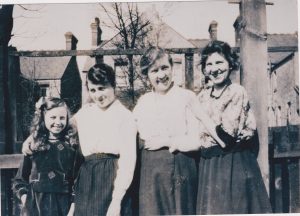
    The absolute highlight of the day was that I successfully reunited Derek (second left above) with Stella (first left, above), the cousin with whom he had grown up. Along with Derek’s sister Cath (middle child above), they had been close friends who played together as children in Sheffield. They had lost touch after the war and hadn’t seen each other for some 70 years. Sadly, Stella already had dementia, but her amazing carers brought her from Cheshire, and all the talk of the old days came so naturally to her. It was fabulous to see them back together, and to hear them immediately start to reminisce about their childhood.


    I’m not sure what other people do for significant birthdays, but to me, reunions and family histories seem quite normal!

  8. New Year’s Resolutions

    At this time of year, my Twitter feed is full of items on the making (and keeping) of New Year’s resolutions. I used to make resolutions on New Year’s Eve, fully intending to keep them throughout the following year. How often did I manage to sustain my intentions? Very, very rarely!

    Rather than looking at methods of improving the success rate of maintaining changes, I began to wonder why so many of us go through this process, often continuing to do so despite previous failures. A real triumph of hope over experience!

    It seems that the history of making resolutions at the start of a new year goes as far back as the Babylonians, whose promises to pay their debts were intended to please their gods, in the hope that good fortune and bountiful crops would result. A similar practice was followed by the Romans, who also changed their calendar, making 1st January the first day of the year. January was named after Janus, a Roman god depicted with two faces, seeing both forwards and backwards. He was known as the spirit of doorways and the god of beginnings, and it is easy to see the connection with reflecting on the past year and looking ahead to the next.

    Making resolutions of a more private and personal nature has its roots in these early religious and superstitious practices. I found the following item in The Derry Journal of 9 January 1885, itself sourced from The New York Ledger:


    © THE BRITISH LIBRARY BOARD


    The writer tells us that the practice of making personal resolutions had already been around for some time, but was now in decline. It was the writer’s view that it only continued “among the young ladies who keep diaries”, who were apparently doomed to fail by making too many unrealistic demands on themselves. This may still be true today. It is certainly the case that my Twitter feed would be a very different place at the change of the year if we all managed to maintain our New Year’s resolutions!

    Whilst I have no glove-related plans for the coming year, I do have a genealogical objective for my personal family history.

    The phrase “physician, heal thyself” is as equally applicable to genealogists as it is to many skilled professions. I work hard to ensure that client work is carried out to the highest standard, but parts of my own family history sit sadly neglected in boxes, folders and files, scattered in different places around the house. When my Dad died almost five years ago, I acquired many books, photos, documents and assorted memorabilia. At the same time I moved house. As a result, much of the inherited paperwork, objects and personal effects languish in the loft, disorganised, uncatalogued, and in the case of many of the photos, unidentified.

    2018 is the year that this changes: genealogist, catalogue thyself! Not only am I going to liberate these boxes and bags from the loft, but I will write occasional blogs on the subject of organisation and my experiences. If anyone has any suggestions or recommendations for books, articles or blogs which have helped them do something similar, then I would love to hear from you!


  9. A passion for family history

    Over the last couple of years, I have accepted several invitations to appear on BBC Radio Sheffield to talk about family history and research. One particular question has come up on each occasion: how did I become interested in researching my family tree? I have often asked it of myself too! As an adoptee I wondered a lot about my origins and felt as if I did not belong anywhere. That, coupled with my love of detective stories, may have made my move into genealogy inevitable!

    To be honest, I cannot remember exactly when or why I thought it would be a good thing to research my family history. I know it was a long time ago, some 35 years or more. This was before the internet and when searching was quite different! I first started looking into the past when the 1881 census was the latest one to have been released, long before it was digitised, transcribed and indexed. I can vividly recall my amazement when I first read the handwritten census returns for Ashford in Kent, and found the names of my great-great-grandparents. I could see their ages, where they had been born, what they did for work, where they lived and details of other family members I had not previously known. Suddenly they felt like real people to me:

    This revelation took place in Portugal Street in London, in a darkened reading room, where I wound my way through microfilmed images of those original records. I was sitting next to a friend and we giggled with delight (very quietly of course) as we uncovered the lives of our ancestors. In those early heady days of discovery, every find was punctuated with long waits until we could get time off work and return to London to search the next batch of records. Each trip was an exciting adventure into the unknown.

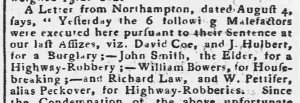
    Searching is now virtually unrecognisable from when I started, but technology has enabled me to make some amazing links which I would have struggled to do back then. My most incredible find? Newpaper reports of a highwayman ancestor of my in-laws – an out-law! – hanged for his crimes, who came from the tiny village in which my husband and I had lived for 15 years. That’s another story, for a future blog, but here’s a taster from the Derby Mercury, 26 July 1787:

    What began as a search for identity has become a lifelong passion for family history.

    Of course this is my story, my answer to the question: why genealogy? But what of others? I posed this question on Twitter during one #AncestryHour. Some said they had unusual family names and wanted to know where they had come from. When family members died, others inherited paperwork filled with unknown names and were left wondering who these people were. Still more were captivated by family stories or research already started by others. Today, many are inspired by television programmes such as Who Do You Think You Are? and Long Lost Family. Whatever your motivation, why not give it a go? You never know what you might find.

  10. A little introduction

    Welcome to my new website!


    Until this year I was trading as Rootstock Research, but the name has never really worked for me. I can’t really explain why, except that it was never my first choice. I loved the alliteration, but I wanted Family Finders, as that sums up my business model the best. I trace families, past and present! Unfortunately for me, Family Finders is already taken as a web address, and is the same name as a BBC TV series. It is also closely associated with finding adoptive families for children today.


    I have agonised over this issue for too long. I had a business name that I disliked, and therefore I rarely used it. Not a great way to gain more business! It gradually dawned on me that most of my work came from personal recommendations, with people being given my name rather than my business details. Luckily for me the domain www.kathywilshaw.co.uk was available and thus the die was cast!


    Creating the website has been a major job in itself. Grateful thanks to Paul at Beachshore for bearing with me while I took ages over content. He deserves a medal for his vision and hard work, plus his patience with me as I have tweaked and re-written everything in sight several times over.


    I have stuck with my logo. I always wanted to be a wise old owl, so there was no doubt in my mind that the little brown owl would be my logo. He was hand drawn by one of my very talented birth sisters. Thank you Kerry. This website is a bit of a family effort in many ways. Another hugely talented birth sister pointed me at the fantastic photos. Thanks Cara. My grandparents appear in one of the pictures, and my lovely brother is in another.


    Where would the wise old owl be without her family?


Search This Blog

Categories

Blog Archive

November 2026
M T W T F S S
 1
2345678
9101112131415
16171819202122
23242526272829
30  

Tags